Won’t You Be My Neighbor?
Between back-to-school season and the national initiatives of Welcoming Week (September 10-19) and Good Neighbor Day (September 28), September is the perfect time to shine a spotlight on neighborliness in Baltimore City.
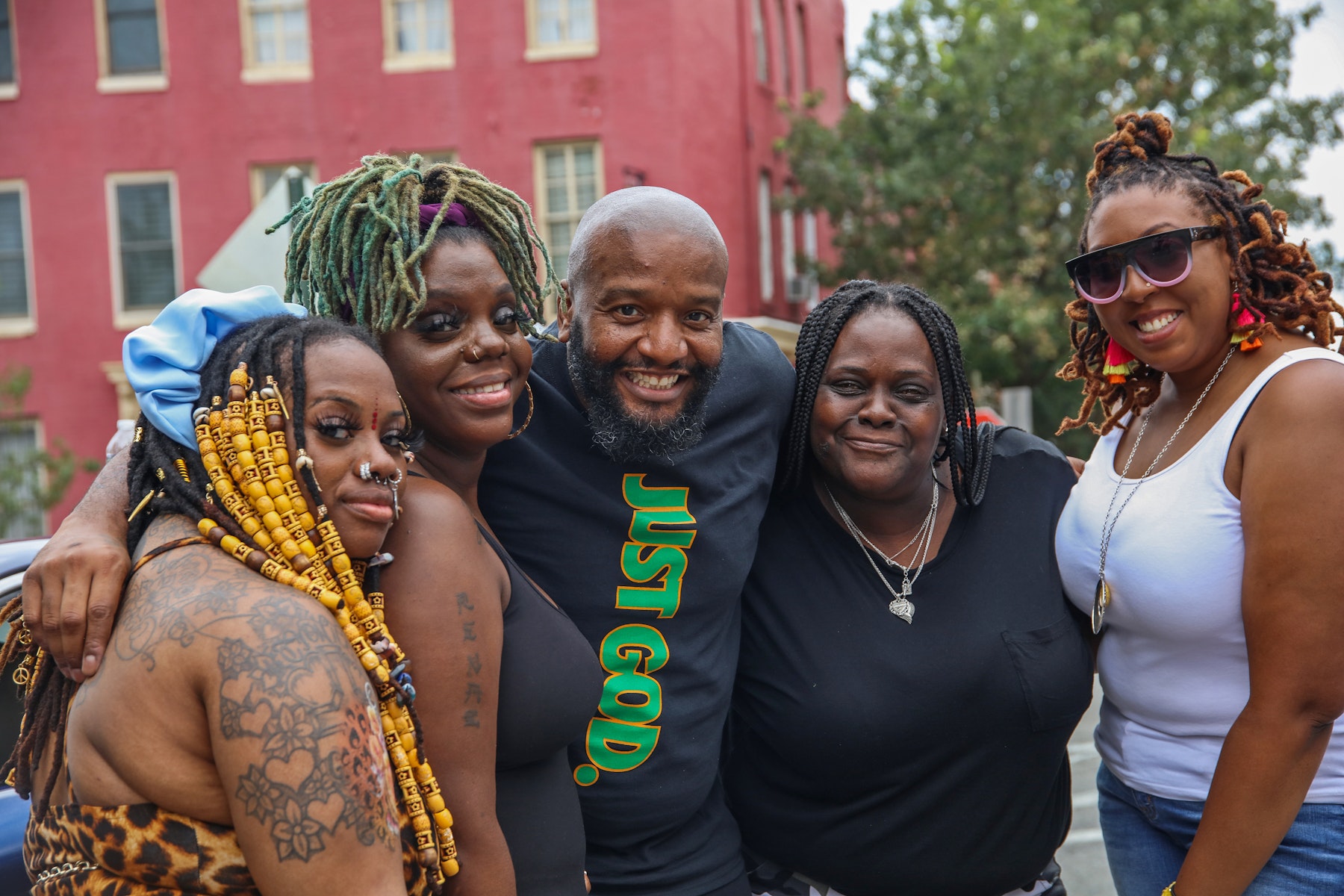
President Jimmy Carter issued the National Good Neighbor Day proclamation in 1978, declaring September 28 a national holiday honoring neighborliness. Communities across the country celebrate in many ways—from a single-day citywide festival to a month-long “tournament of neighboring.” Live Baltimore invites you to consider Good Neighbor Day as an opportunity to get to know your neighbors—no matter what area you’re in, how long you’ve lived there, or if you rent or own.
Here are some suggestions to get you started from the 101 Acts of Neighboring Guide:
- Leave a handwritten note in the mailboxes of three neighbors (bonus: include your phone number and invite them to connect with you)
- Pick up a box of popsicles and share them from a cooler on your stoop one evening
- Organize a neighborhood cleanup blitz, or make it a monthly event
- Host a porch concert with a local musician
- Bring over a home-cooked meal for a neighbor dealing with medical issues
- Invite your neighbors over for a potluck dinner in your front yard (or parking pad)
- Encourage kids of all ages to show off their best sidewalk chalk art
- Compile a “welcome to the neighborhood” handout for new residents
- Leave a bottle of bubbles or a coloring book on a family’s doorstep with a note
- Set up a “reverse lemonade stand” offering free drinks to neighbors and/or delivery drivers and mail carriers
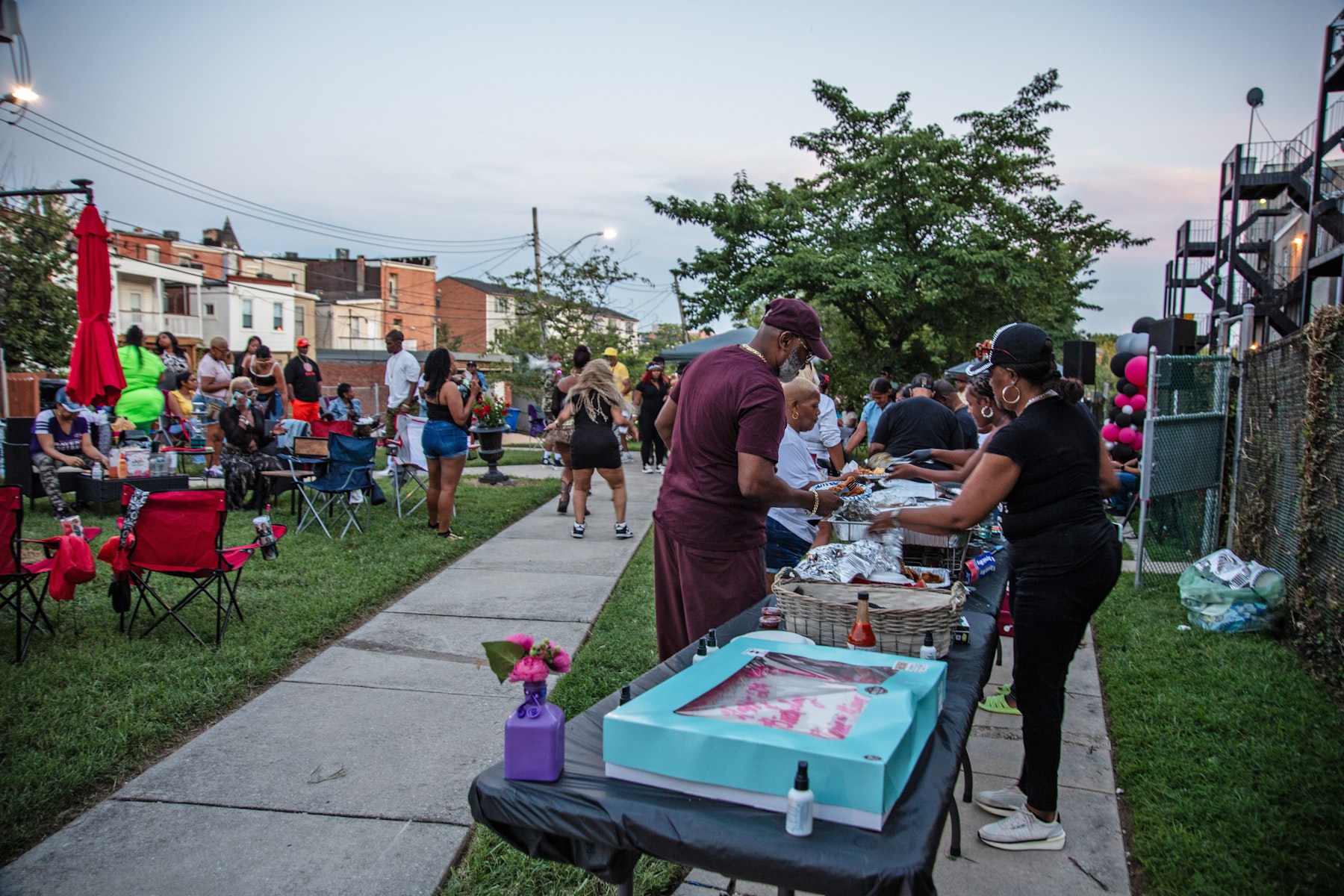
Case Study: Butcher’s Hill
By Alex Zhu, Neighborhood Ambassador for Butcher’s Hill and founder of the Baltimore Chamber of Connection
On a sunny Sunday morning, two friends on my block and I decided that we wanted to meet all of our neighbors. We had each been in Baltimore for a few years, but we still didn’t know most of our neighbors. We knocked on doors for about two hours and met about 75% of our block that day. Our pitch was, “Hi, we’re your neighbors, and we want to get to know everyone on our block!”
We added those who were interested to a WhatsApp group to borrow a cup of sugar, coordinate packages or parking, and share events. The group chat wasn’t super lively at first, but it got more active when new people moved in and asked lots of questions.
I hosted a couple stoop hangs and started getting to know my neighbors a little more in passing. Then, we held our first block party, blocking off the road with cones. To plan the block party, I picked a date and time and confirmed that worked for some neighbors before opening it up in the chat.
One neighbor literally asked for a cup of sugar to make the cake she was bringing to the block party. This is the dream we were going for. My hope going forward is to have more stoop hangs and plan a block-wide event together!
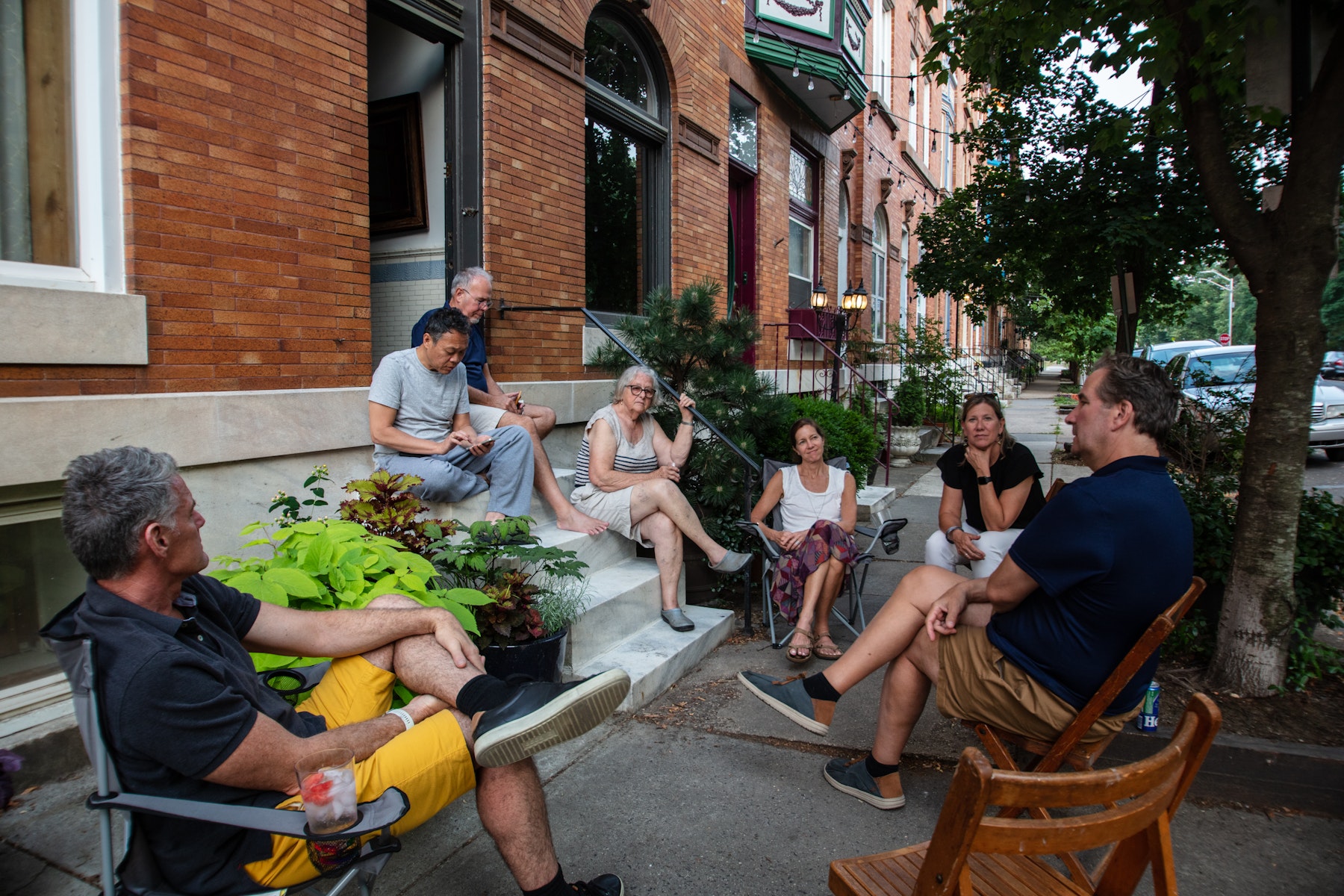
Case study: Seton Hill
By Brandon Wafford Jr., Neighborhood Ambassador for Seton Hill
We sometimes imagine being a good neighbor only as something grand: organizing a block party, starting a neighborhood association, or coordinating a major cleanup. Those things matter. But community is also built through the incredibly ordinary moments of persistence like saying hello, cracking a joke, or showing interest in your fellow Baltimorean.
If I see a package sitting outside a neighbor’s door, especially if it looks like it’s been there for a while, I’ll bring it somewhere safe. Something funny happened when I started doing this: I started meeting my neighbors.
I notice which houses belong to whom. I recognize cars. I make note when someone comes home, when a package is delivered, and when something seems out of place. A person who was once just “the next-door neighbor” has become like a security alarm. These small, everyday actions have built trust and transformed a group of strangers into my community.
Baltimore is a city where you can live remarkably close to people without ever knowing their names. We share sidewalks, stoops, streets, parks, corner stores, and walls. But proximity doesn’t automatically beget community. Attentive care does. Being available in times of need. When I grab a neighbor’s package, I’m not expecting anything in return. I’m just making a small decision to treat something that belongs to someone else as though it were mine.
And that’s what being a decent neighbor really means. Not knowing everyone. Not being perfect. Just paying enough attention to say: I see you. This is your home. Our neighborhood. Let me help take care of it.
- Save your recommendations for later.
- Get access to our Financial Incentives Tool.
- Connect with a Live Baltimore staff member for a one-on-one consultation.
- Get a free I ♥ City Life bumper sticker.
- Save your recommendations for later.
- Get access to our Financial Incentives Tool.
- Connect with a Live Baltimore staff member for a one-on-one consultation.
- Get a free I ♥ City Life bumper sticker.